
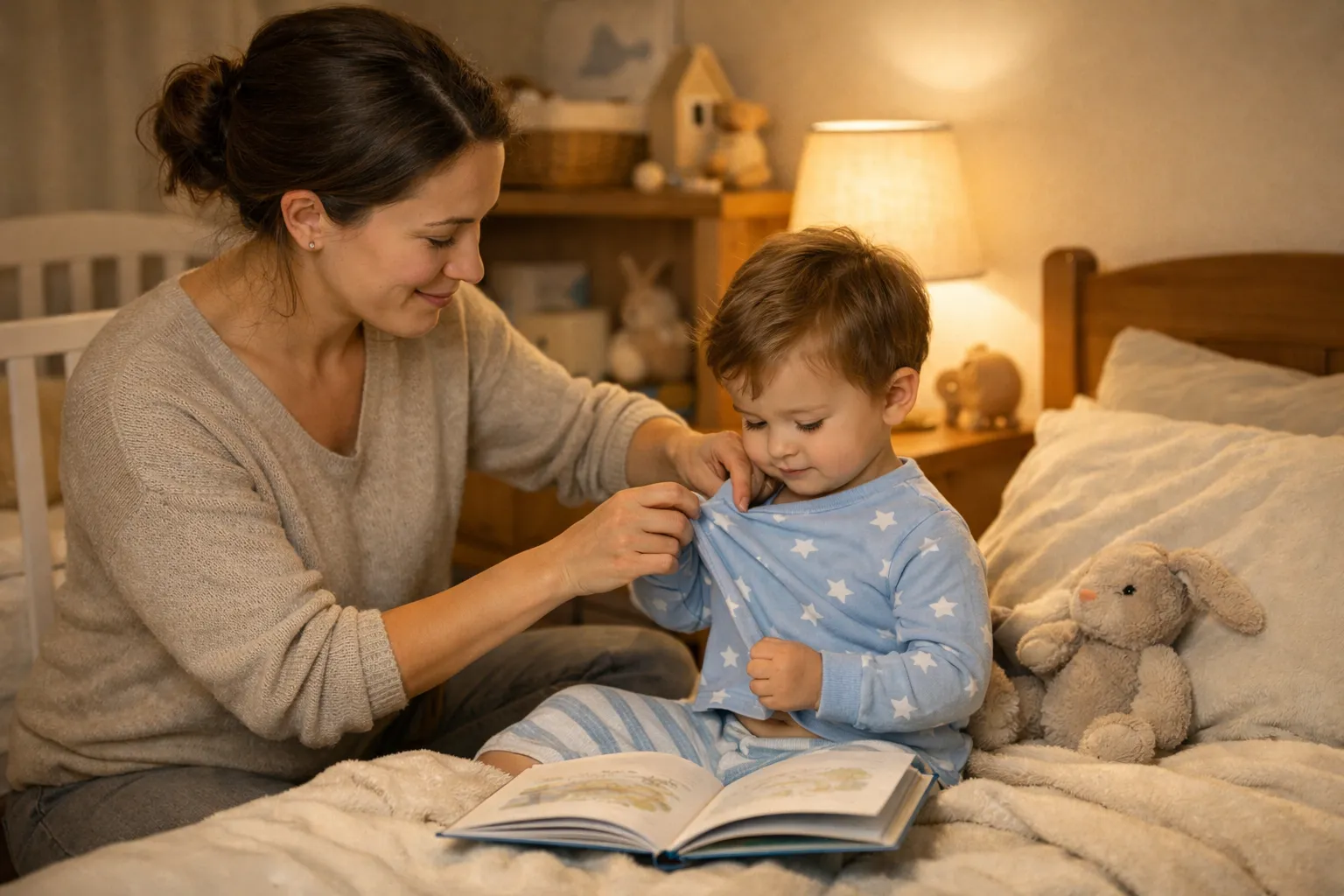
If you’re trying to build a bedtime routine for toddlers, the good news is that it does not have to be fancy to work. In fact, the best routines are usually the simplest ones: short, predictable, and calm. A toddler does not need a perfect schedule or a complicated checklist. They need familiar cues that tell their body and brain, “Sleep is coming next.”
A realistic bedtime routine for toddlers reduces stimulation, repeats the same soothing steps each night, and gives your child a sense of safety and control. When the routine is consistent, bedtime feels less like a battle and more like a rhythm you both know.
Why a bedtime routine matters for toddlers
Toddlers are still learning how to shift from active play to rest. That transition can be hard, especially when the day has been full of noise, movement, screen time, or big feelings. A steady bedtime routine for toddlers helps create a clear bridge between awake time and sleep time.
What matters most is predictability. When the same things happen in the same order, your toddler starts to recognize the pattern. Over time, those steps can become sleep cues. Pajamas, toothbrushing, a book, dim lights, and a final goodnight all help the brain understand that bedtime is close.
A routine can also lower stress for parents. Instead of negotiating every night, you rely on a familiar plan. That structure can make even tough evenings feel more manageable.
For more general guidance on sleep habits and age-appropriate routines, HealthyChildren.org offers practical family-friendly information. If you want simple, child-focused bedtime support, PBS Parents also has helpful ideas for winding down the evening.
A simple bedtime routine for toddlers you can actually stick with
The best bedtime routine for toddlers is the one you can repeat most nights. Keep it short enough that your toddler can finish it without getting overstimulated, but long enough to feel comforting. Many families do well with a 20- to 30-minute rhythm.
Here is a simple sample routine you can adapt:
1. Give a five-minute warning before bedtime begins.
2. Turn off screens and switch to quiet activities.
3. Go to the bathroom or change the diaper.
4. Put on pajamas.
5. Brush teeth.
6. Read one or two books or tell a short story.
7. Sing a song, cuddle, and say goodnight.
This kind of bedtime routine for toddlers works because every step has a purpose. The warning helps with transitions. The quiet activities lower energy. The physical care steps like diapering or toothbrushing add structure. The books or story time create a calm, repeatable ending.
If your evenings are especially busy, simplify further. A calm bath is nice, but it is not required. Two books may be enough. What matters most is that the order stays mostly the same.
How to make the routine calming instead of stimulating
A bedtime routine for toddlers should feel like a slow exhale, not a last burst of activity. If your child gets sillier and louder at night, the answer is usually to reduce stimulation earlier, not to add more excitement to the routine.
Start by dimming lights about 30 to 45 minutes before bedtime if you can. Lower the volume in the house. Save roughhousing, big clean-up projects, and exciting games for earlier in the evening. A calmer environment makes the routine easier to follow.
Try to keep your voice soft and your instructions simple. Toddlers often do better with short phrases than with long explanations. “First pajamas, then books,” is easier to follow than a long reminder about why sleep matters.
It also helps to stay emotionally steady. If your toddler resists, try to avoid turning the routine into a debate. A bedtime routine for toddlers works best when the tone is warm, firm, and familiar.
KidWhispers can fit naturally here as a repeatable cue. A personalized storybook that places your child at the center of the adventure can become a special nightly signal that bedtime is starting. Used the same way each evening, it can help a bedtime routine for toddlers feel familiar and comforting.
Common bedtime struggles and how to handle them
Even a strong bedtime routine for toddlers will not erase every challenge. Toddlers test limits, ask for one more thing, and sometimes seem full of energy right when you want them to settle. That does not mean your routine is failing. It means you are parenting a toddler.
If your child keeps getting out of bed, walk them back calmly and briefly. Try to keep the response boring and consistent. The goal is not to punish; it is to reinforce the boundary.
If bedtime stretches on forever, look at what is happening before the routine starts. An overtired toddler may melt down more easily. An under-tired toddler may need a better balance earlier in the day. A bedtime routine for toddlers works best when the timing matches your child’s natural sleep needs as closely as possible.
If your toddler asks for repeated extras, such as more water, another song, or another book, set expectations ahead of time. For example: “We will have one water break and two books tonight.” Clear limits can reduce the back-and-forth.
If there is separation anxiety, build reassurance into the routine. A quick hug, a phrase you say every night, or a comfort object can help. Consistency is often more soothing than extended negotiations.
How books can support a bedtime routine for toddlers
Books are one of the most useful tools in a bedtime routine for toddlers because they slow the pace and invite connection. Reading together gives your child a chance to settle their body, focus their attention, and end the day with your voice.
The key is to keep story time calm. Choose books that are familiar, gentle, and easy to follow. If your child loves repetition, that is a feature, not a problem. Re-reading the same favorites can make bedtime feel safer and more predictable.
Personalized storybooks can be especially effective as a bedtime cue because they bring familiarity into the routine in a very intentional way. With KidWhispers, personalized stories are designed to make your child the true star of the adventure, which can create a sense of closeness and wonder without adding extra overstimulation. When you use the same storybook at the same point each night, it can become part of the rhythm of a bedtime routine for toddlers.
If you are looking for a meaningful way to build a repeatable story time habit, you can explore our Whisper Coins pricing options to see how personalized books fit into your family’s routine. You can also start from the KidWhispers homepage to learn more about the experience.
The best bedtime books do not have to be long. They simply need to feel soothing, loved, and easy to return to night after night. That repeatability is what makes them powerful.
How to keep the routine consistent without making it rigid
Consistency matters in a bedtime routine for toddlers, but rigidity can backfire. Life happens. Some nights run late. Some evenings end in a bath spill, a missed nap, or a family event that changes everything. The goal is not perfection.
Instead, try to protect the order and the tone. If you cannot do every step, keep the core steps intact. For example, if there is no time for a bath, you might still do pajamas, teeth, one book, and a song. That is enough.
It can help to think in layers. Your non-negotiables are the steps that signal sleep most clearly. For many families, that means quieting the house, changing clothes, brushing teeth, and sharing a book. Everything else is a bonus.
Over time, your bedtime routine for toddlers may need small updates as your child grows. What works at age two may need a tweak at age three or four. That is normal. The shape of the routine matters more than the exact details.
If you keep the mood warm and the steps familiar, your toddler will likely settle into the pattern more easily. Predictability is the real win.
FAQ
How long should a bedtime routine for toddlers be?
A bedtime routine for toddlers is often best when it lasts about 20 to 30 minutes. Shorter routines are easier to repeat and less likely to become overstimulating.
What time should a bedtime routine for toddlers start?
The ideal start time depends on your child’s age, nap schedule, and family rhythm. The routine should begin early enough that your toddler can wind down without becoming overtired.
What if my toddler wants more books every night?
You can set a clear limit in advance, such as one or two books. If you use the same book or story each night, that repetition can be calming and expected.
Can a personalized story help with bedtime?
Yes. A personalized story can work as a repeatable cue in a bedtime routine for toddlers because it feels special, familiar, and comforting when used consistently.
Build a bedtime rhythm your family can keep
A strong bedtime routine for toddlers does not have to be perfect to be effective. It just needs to be calm, predictable, and repeatable enough that your child knows what comes next.
Start with a simple sequence, keep the tone soothing, and repeat the same cues often. If you want a bedtime ritual that feels personal and memorable, KidWhispers can help make story time part of your nightly rhythm.
When you are ready to explore a bedtime story that places your child at the center of the adventure, visit the KidWhispers homepage and see how it can fit into your family’s evening routine.