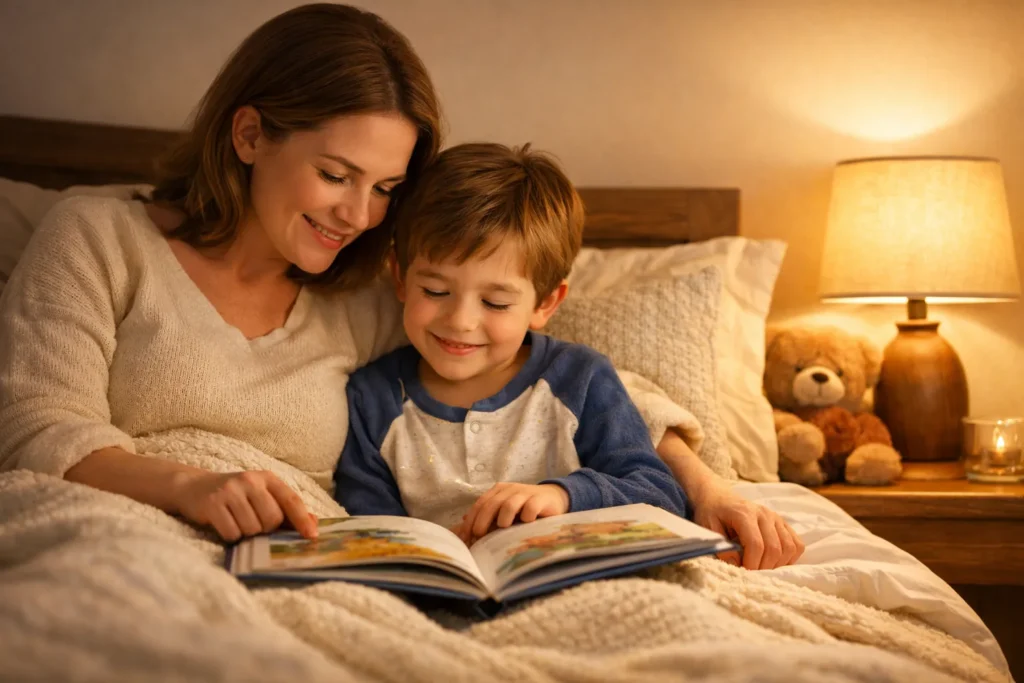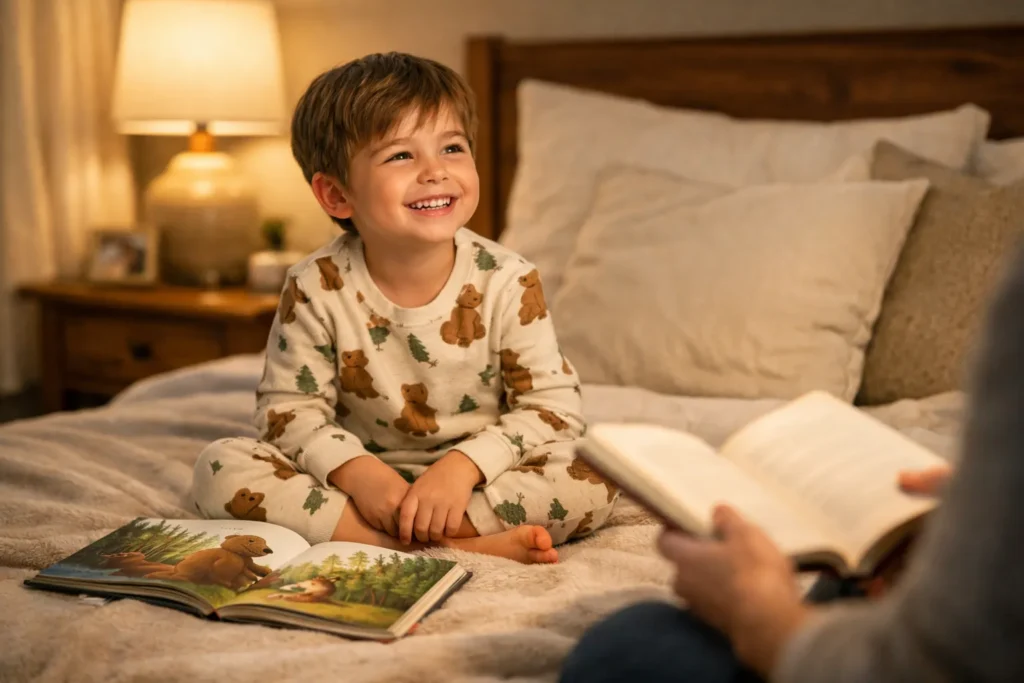
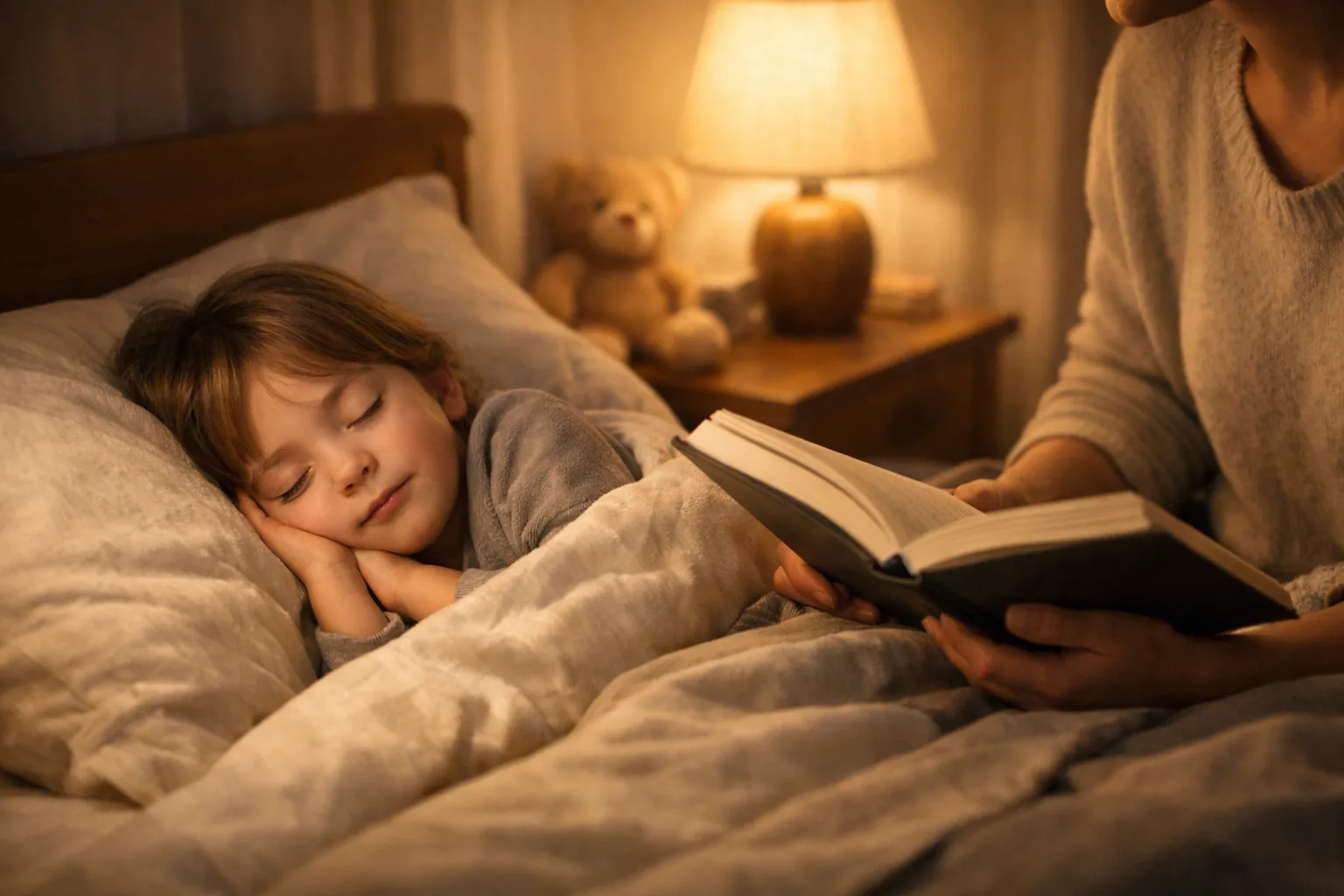
Many parents wonder, does reading help children sleep when bedtime feels like a battle? For a lot of families, the answer is yes. Reading gives children a quiet, predictable bridge from the energy of the day into the calm of night. It lowers stimulation, slows the pace of the evening, and creates a familiar cue that sleep is coming. That’s one reason story time is such a trusted bedtime habit in homes everywhere, including families who use KidWhispers to make the routine feel special and consistent.
Does reading help children sleep better? Often, yes. A calming bedtime story can help children settle, unwind, and transition more smoothly into sleep when it is part of a steady routine.
Why does reading help children sleep so well?
One of the biggest reasons does reading help children sleep is that it changes the pace of the evening. After a full day of noise, movement, screens, school, and play, reading invites the body and mind to slow down. It is quiet. It is familiar. It does not demand big physical effort or active problem-solving the way more stimulating activities do.
Children often respond well to repetition, and bedtime stories give them something they can count on. The same chair, the same lamp, the same book, the same parent’s voice, and the same ending sequence can become a strong signal that the day is over. For many families, that predictability is the real magic behind does reading help children sleep.
Reading also creates closeness. A child who feels safe, connected, and settled is often better able to relax. That emotional comfort matters just as much as the story itself. When bedtime feels warm instead of rushed, children may have an easier time moving toward sleep.
The bedtime rhythm behind does reading help children sleep
To understand does reading help children sleep, it helps to think about bedtime as a sequence. Children usually do best when the evening follows a similar pattern each night. Dinner, bath, pajamas, brush teeth, story, lights out. That kind of rhythm helps reduce uncertainty, which can make the whole process feel safer and more manageable.
Once the routine becomes familiar, the brain begins to recognize the pattern. Story time can act like a soft landing point between the active part of the day and the restful part of the night. The predictable structure matters because children do not always want to stop moving or playing on their own. A repeated routine helps guide them there.
That is why reading is often more helpful when it is not random. It works best when it is part of a larger bedtime routine that happens the same way most nights. If you want to explore a simple way to build that consistency, the KidWhispers homepage shows how personalized stories can become a familiar part of bedtime.
Bedtime physiology without the jargon
Parents do not need a science degree to understand why does reading help children sleep can be such a useful question. At bedtime, children need help shifting from alert mode to rest mode. Reading supports that shift because it is generally quiet, low-energy, and emotionally grounding.
There is also a difference between active stimulation and passive winding down. Fast-paced games, bright screens, and noisy activities can keep children feeling “on.” A calm book, by contrast, helps the evening move in the opposite direction. The body has a better chance to relax when the environment is dimmer, quieter, and more predictable.
Reading is not a cure-all, and every child is different. Some children will still need help settling, especially during developmental stages, big life changes, or when they are overtired. But as a bedtime cue, reading fits naturally with the kind of environment that supports sleep. For more guidance on age-appropriate sleep habits, parents may also find useful resources from HealthyChildren.org.
What kinds of books work best?
If you are wondering does reading help children sleep more when the book is calm, the answer is usually yes. Not every book is equally bedtime-friendly. The best choices are often books with gentle pacing, soothing language, and a familiar structure. Short chapters, soft illustrations, and comforting themes can all help.
Books that are too exciting may have the opposite effect. If a story is full of suspense, loud conflict, or overstimulation, it can keep a child’s mind buzzing instead of winding down. Bedtime is usually not the time for cliffhangers or highly active adventures, unless your child already finds those stories relaxing.
Look for stories that feel warm, predictable, and emotionally safe. Rereading beloved books is completely fine. In fact, many children love repetition. They know what comes next, and that sense of mastery can be calming. KidWhispers stories are designed with that in mind, making does reading help children sleep feel more like a comforting nightly ritual than a one-time event.
Simple routine ideas that make reading more effective
When parents ask does reading help children sleep, the routine around the story is often just as important as the story itself. A strong bedtime routine helps the reading time feel like a clear signal rather than a loose suggestion. Keep the order steady, the environment soft, and the transition into bed calm.
Try reading in the same place each night if possible. Lower the lights. Put away screens before the story begins. Keep the number of books realistic for your child’s age and energy level. For some children, one book is enough. For others, two short stories may work well. The key is consistency, not perfection.
You can also make the moment feel special with a familiar ritual, such as a cuddle, a soft voice, or letting your child choose the story. Personalized bedtime stories can add another layer of comfort because the child becomes the center of the narrative. Families who want to make story time more personal can look at KidWhispers pricing to see how Whisper Coins work for creating these custom adventures.
If your child resists sleep, try keeping your bedtime reading calm and brief rather than turning it into a longer negotiation. The goal is to help the child settle, not to entertain endlessly. A reliable routine often works better than a complicated one.
When reading helps most, and when to adjust the routine
There are times when does reading help children sleep is especially true. It can be helpful for children who need a clear transition out of an active day, children who enjoy repetition, and children who respond well to closeness and routine. It can also be useful during busy seasons when life feels less predictable and bedtime needs extra stability.
Still, there are moments when you may need to adjust the routine. If your child is too wired, too tired, or having a hard time separating from the rest of the evening, the book alone may not be enough. You may need to shorten the bedtime routine, move story time earlier, or choose a more soothing book.
Some children also do better when they know exactly what to expect from the story itself. This is where personalized bedtime reading can be especially comforting. When the child is the star of the story, the experience can feel deeply familiar, which may support that sleepy, secure feeling parents are hoping for.
For more general ideas on bedtime reading and family literacy, PBS Parents offers helpful guidance at PBS Parents. That kind of support can be a good companion to your own bedtime routine.
FAQ
Does reading help children sleep if they already have a bedtime routine?
Yes. Reading often works best as part of an existing routine because it becomes one more familiar cue that bedtime is near.
Does reading help children sleep better than screen time?
Usually, yes. Reading is typically calmer and less stimulating than screens, especially when the goal is to wind down.
Does reading help children sleep even if they ask for “just one more” book?
It can, but boundaries matter. A consistent limit helps the routine stay soothing instead of becoming a delay tactic.
Does reading help children sleep if the book is personalized?
For many children, it can. Personalized stories may feel more engaging and comforting, which can make bedtime feel more settled and familiar.
A calmer bedtime starts here
If you have been asking does reading help children sleep, the most practical answer is that it often does when it is part of a peaceful, repeatable routine. A good bedtime story can lower the energy in the room, help children feel safe, and create a dependable bridge to sleep.
At KidWhispers, we believe bedtime should feel personal, comforting, and worth looking forward to. If you are ready to make story time a calmer nightly habit, explore the KidWhispers homepage and see how a child-centered bedtime story can help your family wind down with more ease.